


Splendour in the Grass Veterans Bet on the 'In-Between' With Sydney Summertime
Splendour in the Grass veteran Elise Huntley sat down with The Music Network to talk Sydney Summertime, post-Covid audiences, and why scale isn’t necessarily the goal.

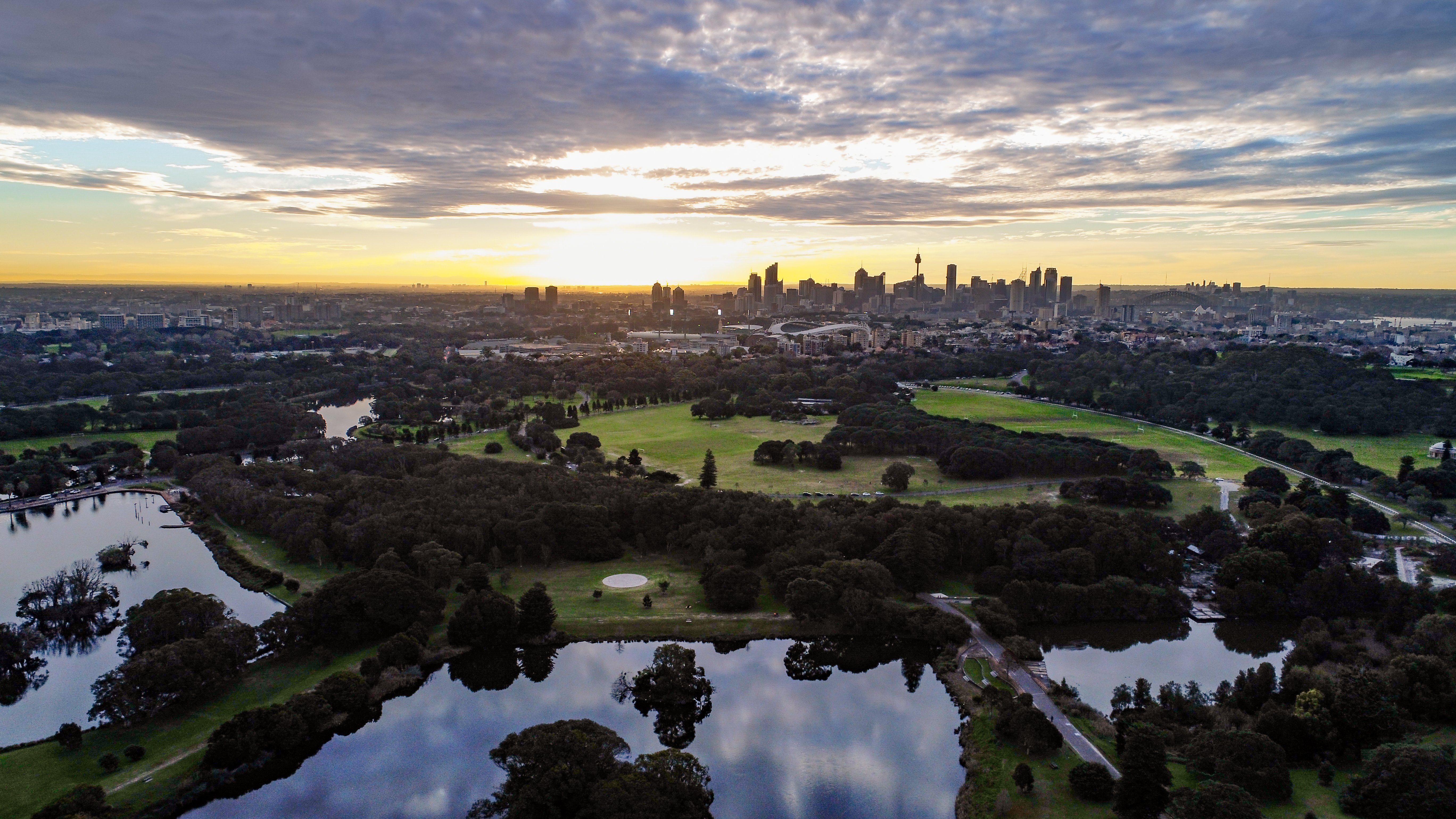
Somewhere between a sweaty arena show and a three-day camping trip with a car pass, a tent, and an unreliable weather forecast, there’s a gap in Sydney’s live music calendar. Elise Huntley and Jessica Ducrou think they’ve found it, and they’re putting it in Centennial Park.
The pair have spent more than three decades building some of the country’s best-loved festivals, including Splendour in the Grass, Falls Festival, Harvest Rock, Download, and Sydney City Limits. Their latest venture, through their independent events company Black Peach, is Sydney Summertime. It’s a run of standalone concerts across late February and early March 2027 that typically start at 4pm and finish at 10pm. Instead of a quick-service bar and a hot chip stand, there are restaurant pop-ups, food trucks, and cellar doors.
The series opens on Saturday, February 20th, with The Strokes headlining, supported by Beck, Courtney Barnett, and Promiseland. Kings of Leon follow on Sunday, February 28th, with Ocean Alley. You can pick how you see each show, from general admission and Gold Circle through to the Grove VIP Village, the Terrace viewing deck, and the Suites.
Huntley sat down with The Music Network to talk about how audiences changed after Covid, why stadium-sized demand doesn’t need a stadium, and why Summertime’s ambitions have nothing to do with getting bigger.

The Music Network: What made you and Jess decide Sydney Summertime was the next thing you wanted to do?
Elise Huntley: Coming out of Covid was a real game changer. What people wanted to experience had changed. Rather than committing to going away on long trips, people started wanting a shorter format, and different experiences as well.
Reporting from inside the Australian music business since '94.
That came through towards the end of Splendour. In the last few years we’d started putting in different levels of experience, with the introduction of the VIP Village and then Platinum. And with Harvest Rock, which became more of an elevated festival experience, the music still took centre stage, but there were all these other experiences outside the music, like food, wine, and a food stage.
What we saw was a gap. There are shows that play arenas and there are stadium shows, but there’s that in between. And it’s about giving people more of an experience, so they can choose their own adventure. That’s the beauty of Summertime. You can buy a GA ticket and still have some great add-on experiences. There’ll be food trucks, pop-up restaurants, and destination bars. It’s built almost like a festival, so it’s not just a show with quick-service bars.
You can also elevate your experience. There’s Gold Circle, or there’s the Grove, which is our version of VIP Village, with more curated food and beverage offerings. Then there’s the Terrace, which is about elevated viewing and also gives you access to the VIP area. And then the Suites are the next level up. It’s about offering all those different levels.
It feels like an in-between with the lineup too. It’s not just The Strokes, there are multiple acts.
But it’s still a short format. It’s 4pm till 10pm, so it’s not a full-day festival. And there’s the convenience of being in the centre of the city, so it’s easy to get to whether you’re travelling in and staying in Sydney or you live in Sydney or its surrounds. I think that’s really important.
You can come at four o’clock in the afternoon and see some great artists, but you can also have good food, or sit down in a wine bar or a cellar door and get a cheese and charcuterie board. That’s been the ethos for Jess and me all along: how do you give people a great experience? The music is the main part and that’s the focus, but then you’ve got all this space around it where you can really elevate things.
Is that the biggest change you’ve seen over the years, the need for things outside the music?
Yes! Coming out of the last six years, behaviour really shifted and what people wanted really moved. Going to a show is a commitment, and there’s also a massive cost-of-living crisis. So people are quite discerning about what they do, but they want to feel engaged. They want to feel special, like they’re getting a special experience. This is a great example of that. Because of the structure and the way we’re presenting it, we have the opportunity to build a whole lot around it. People’s behaviour shifted, and so did their expectations.
Were there other expectations you noticed from audiences beyond the experience?
Mainly experience, but also ease. A lot of people are still fairly traumatised by how many things kept getting cancelled, so they became quite reactive to that, and it just became too hard. You saw ticket sales shifting and a lack of confidence when everything started back up again in 2022 and 2023.
That lack of confidence in the market became quite noticeable, and it was challenging for a while when you were booking shows and festival lineups. It’s swinging back around now. You’re starting to see demand again, and some big shows have come through recently.
Apart from a few multi-day and camping festivals, there’s still strong demand for single-day city formats, because they’re easier to organise. You don’t have to plan travel or a trip. Single-day metro formats are easy to get into.
There’s the financial side too. With a three-day camping festival it’s the ticket, car pass, camping, and food and drink for three days.
It’s not as easy to do anymore. There’s definitely still a place for some of them, but there aren’t as many as there used to be. It’s always been cyclical. There was a time when stadium shows were all the rage, and then they fell off a bit. Then you had multi-day regional camping festivals, where you got your group together and that was exciting.
Now there’s a shift back. It fluctuates with whatever the external environment is dictating at the time. Where there are real cost pressures, the single-day metro format becomes a more desirable place to be.
Are you seeing stadium shows come back as well?
Definitely. Look at some of the artists doing stadium shows who probably wouldn’t have been previously. I think that’s more of a situational phenomenon. They’ve moved up to stadiums a lot quicker than they might have naturally.
You’re seeing it around the world. I was reading an article the other day asking whether stadiums should now be built for music. Stadiums are built for sport, not music, but music shows obviously work in them. With demand this strong, is there a need to build stadiums specifically for music?
Where we sit is that we can flex up, whether that’s 25,000, 30,000, or more. We can build Sydney Summertime out as a greenfield site. Say we go to 40,000, which some of the other shows in Centennial Park do. That’s still not a stadium; those start at around 50,000–60,000. Arena shows are 10,000–15,000. So we’re offering a cross between a stadium show and an arena show, but on a greenfield site, where you’re not limited to hot food stands and a few drinks options.
With rising costs, are programmers taking fewer risks on lineups, particularly with discovery acts? Is that something you’ve had to consider?
Not so much for Sydney Summertime. Look at someone like Laneway. They program really well, with great headliners and great discoverable artists too. Longer-format festival days give you the ability to do that.
This is a short-format show with, using the night The Strokes are headlining as an example, four acts. The other beauty of Summertime is that promoters are putting shows into it, and there are some that Summertime is developing itself. A lot of those acts also have tours around the rest of the country, playing arenas in other cities, so their lineup is already established. That’s why you’re seeing an artist like Beck playing with The Strokes for Sydney Summertime only, and not on the other dates, which are arena shows.
Do you have an overarching ambition for Sydney Summertime, something you’d like to have achieved in, say, five years?
I don’t think it’s necessarily about size. It’ll be more about the offerings and how they build out. At the moment we’ve got the concert format, so what else could it look like? What else could enhance the Sydney Summertime brand? It’ll be about the breadth and depth of what we offer, and responding to demand as we grow. There’s real opportunity for some exciting additions. It’s not about scale for us. It’s about what we can offer and how we can enhance it.
Of the different tiers, is one proving more popular than the others so far?
There’s been a lot of interest in the Suites. The Terrace is an interesting one because it’s never really been done here before. It’s elevated viewing, but you also get an elevated experience with it, and there’s definitely interest there. There’s also a lot of interest in VIP and Gold Circle. There’s still a great element of fandom, with people wanting to get up close to their favourite acts, and that drives a lot of the Gold Circle demand. But plenty of people also want that slightly different, elevated experience. Overall there’s been a lot of interest in the VIP add-ons.
After more than 30 years in the industry, what still excites you about building something new?
Every time you put an act on stage and see the crowd’s reaction. That’s still one of the most exciting things. It’s fabulous to see people having a great time, and to see a community, because every show has its own community. That’s the most important part, and it’s never changed from day one. I know Jess is the same. That’s why we focus so much on the experience. People need to feel they’re getting great value, and that they’re experiencing something that takes them out of the everyday. Music will always do that, but you can always make it better.
Are there things you’re still learning?
Always. You work on the 80-20 rule: you get 80% really nailed down, because 20% is always going to need to flex. That 20% is where you learn something new, and it’d be crazy if you didn’t, because every show is different. For Jess and me, coming back after a bit of time off, things had shifted: the way everything’s done and the way people behave. So it’s about realigning with that again.

Is there anything about Summertime you’d like to add?
The rest of the lineup and dates are coming out very soon. We’ve got some exciting announcements over the next couple of weeks, with a few more shows to launch.
What’s really exciting about Sydney Summertime is that it’s not genre-specific. The artists and the audiences it attracts will be incredibly varied. It’s a series, but each concert will have its own identity. The next one could be somebody completely out of the box, and the one after that could be completely different again. That’s the beauty of it, there’s something for everybody. No genre or demographic is too far out there for Sydney Summertime. It’s multi-genre, so it won’t sit in one category.
For more information on Sydney Summertime, see here.


